ISSN: 2332-0877
Journal of Infectious Diseases & Therapy
天美传媒 Access
Our Group organises 3000+ Global Events every year across USA, Europe & Asia with support from 1000 more scientific Societies and Publishes 700+ 天美传媒 Access Journals which contains over 50000 eminent personalities, reputed scientists as editorial board members.
天美传媒 Access Journals gaining more Readers and Citations
700 Journals and 15,000,000 Readers Each Journal is getting 25,000+ Readers
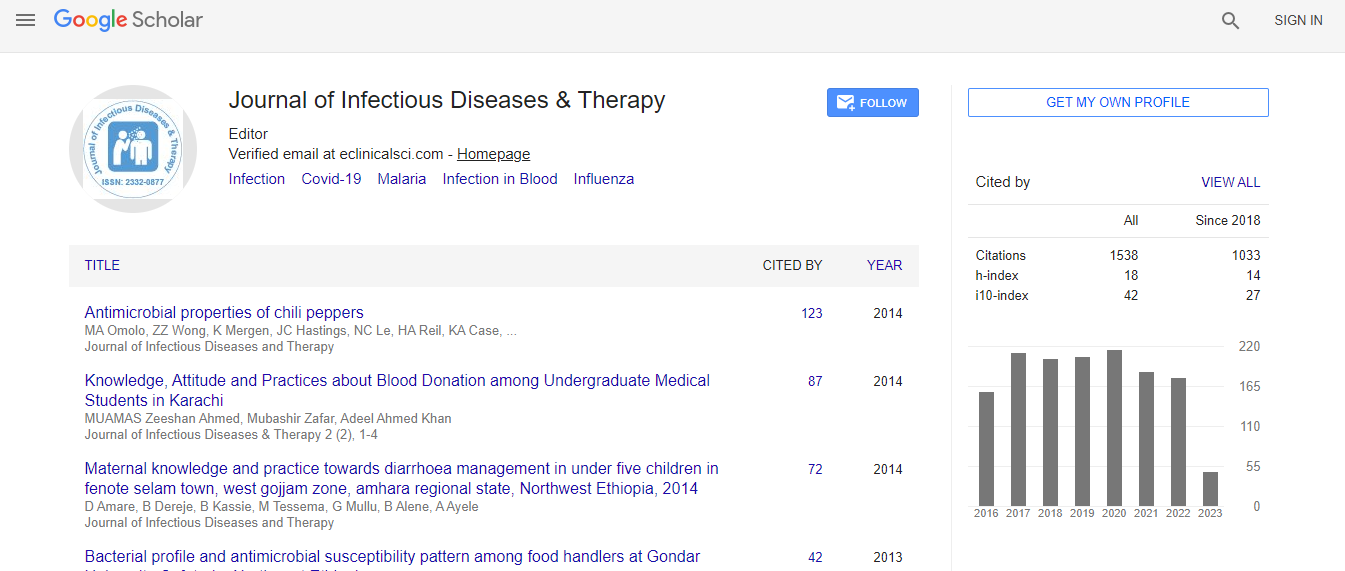
Citations : 1529
Indexed In
- Index Copernicus
- Google Scholar
- 天美传媒 J Gate
- RefSeek
- Hamdard University
- EBSCO A-Z
- OCLC- WorldCat
- Publons
- Euro Pub
- ICMJE
Useful Links
Recommended Journals
Related Subjects
Share This Page
Exploring the climatic and land use factors behind the 1999 Vancouver Island outbreak of Cryptococcus gattii
Joint Event on 3rd International Conference on Infection, Disease Control and Prevention & 2nd International Conference on Microbial Pathogenesis & Infectious Diseases
Emily Acheson
University of British Columbia, Canada
Posters & Accepted Abstracts: J Infect Dis Ther
DOI:
