天美传媒

ISSN: 2161-069X

Journal of Gastrointestinal & Digestive System
天美传媒 Access

Our Group organises 3000+ Global Events every year across USA, Europe & Asia with support from 1000 more scientific Societies and Publishes 700+ 天美传媒 Access Journals which contains over 50000 eminent personalities, reputed scientists as editorial board members.

天美传媒 Access Journals gaining more Readers and Citations
700 Journals and 15,000,000 Readers Each Journal is getting 25,000+ Readers

This Readership is 10 times more when compared to other Subscription Journals (Source: Google Analytics)
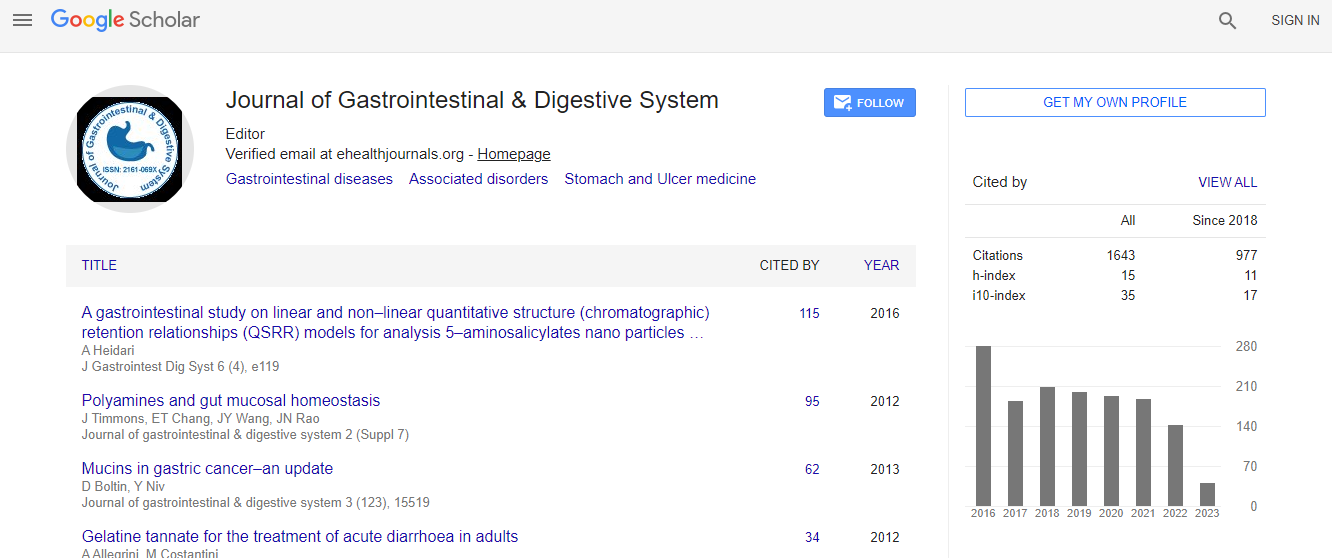
Citations : 2091

Indexed In
  • Index Copernicus
  • Google Scholar
  • Sherpa Romeo
  • 天美传媒 J Gate
  • Genamics JournalSeek
  • China National Knowledge Infrastructure (CNKI)
  • Electronic Journals Library
  • RefSeek
  • Hamdard University
  • EBSCO A-Z
  • OCLC- WorldCat
  • SWB online catalog
  • Virtual Library of Biology (vifabio)
  • Publons
  • Geneva Foundation for Medical Education and Research
  • Euro Pub
  • ICMJE
Share This Page

Inhibition of hepatitis C virus in chimeric mice by sshRNAs: Sequence analysis of surviving virus shows added selective pressure of combination therapy

3rd International Conference on Gastroenterology & Urology

Brian H Johnston

ScientificTracks Abstracts: J Gastroint Dig Syst

DOI:

Abstract
It was previously shown that a cocktail of two short synthetic shRNAs (sshRNAs) targeting the internal ribosome entry site of hepatitis C virus (HCV) formulated with lipid nanoparticles was able to suppress viral replication in chimeric mice infected with HCV GT1a by up to 2.5 log10. Viral load remained about 1 log10 below pre-treatment levels 21 days after the end of dosing. HCV viral RNA amplified from serum of treated mice after the 21-d follow-up period was sequenced. Viral RNA from the HCV sshRNA-treated groups was altered in sequences complementary to the sshRNAs and nowhere else in the sequenced region, while the viruses from the control group that received an irrelevant sshRNA had no mutations in that region. The ability of the most commonly-selected mutations to confer resistance to the sshRNAs was confirmed in vitro by introducing those mutations into HCV-luciferase reporters. The most frequent mutations selected by sshRNA treatment within the sshRNA target sequence were at the most polymorphic residues as identified from an analysis of available clinical isolates. These results demonstrate a direct antiviral activity with effective HCV suppression, and confirm an RNAi mechanism of action. It is concluded that either a potent sshRNA against a highly conserved HCV target sequence or a combination of 2 sshRNAs against two different target regions could be effective against HCV infection when combined with antiviral agents having different mechanism(s) of action, but a cocktail comprising more than two sshRNAs would be required in any treatment relying on sshRNAs alone.
Biography
Brian H Johnston is Founder and CEO of SomaGenics, which invents and develops RNA-based therapeutics and diagnostic tools. He holds a BA in Chemistry from Pomona College, a PhD in Biophysical Chemistry from UC Berkeley, and performed Postdoctoral research at UC San Francisco and MIT. He subsequently moved to SRI International, where he was a founding Director of the Nucleic Acids Program before starting SomaGenics. He is author of some 56 research publications and reviews and has been a Principal Investigator or Co-investigator of research grants totaling $20 million. He has held faculty appointments at MIT, Stanford, and the University of Paris.
International Conferences 2026-27
 
Meet Inspiring Speakers and Experts at our 3000+ Global

Conferences by Country

Medical & Clinical Conferences

Conferences By Subject

Top Connection closed successfully.