
ISSN: 2332-0877
Journal of Infectious Diseases & Therapy
天美传媒 Access
Our Group organises 3000+ Global Events every year across USA, Europe & Asia with support from 1000 more scientific Societies and Publishes 700+ 天美传媒 Access Journals which contains over 50000 eminent personalities, reputed scientists as editorial board members.
天美传媒 Access Journals gaining more Readers and Citations
700 Journals and 15,000,000 Readers Each Journal is getting 25,000+ Readers
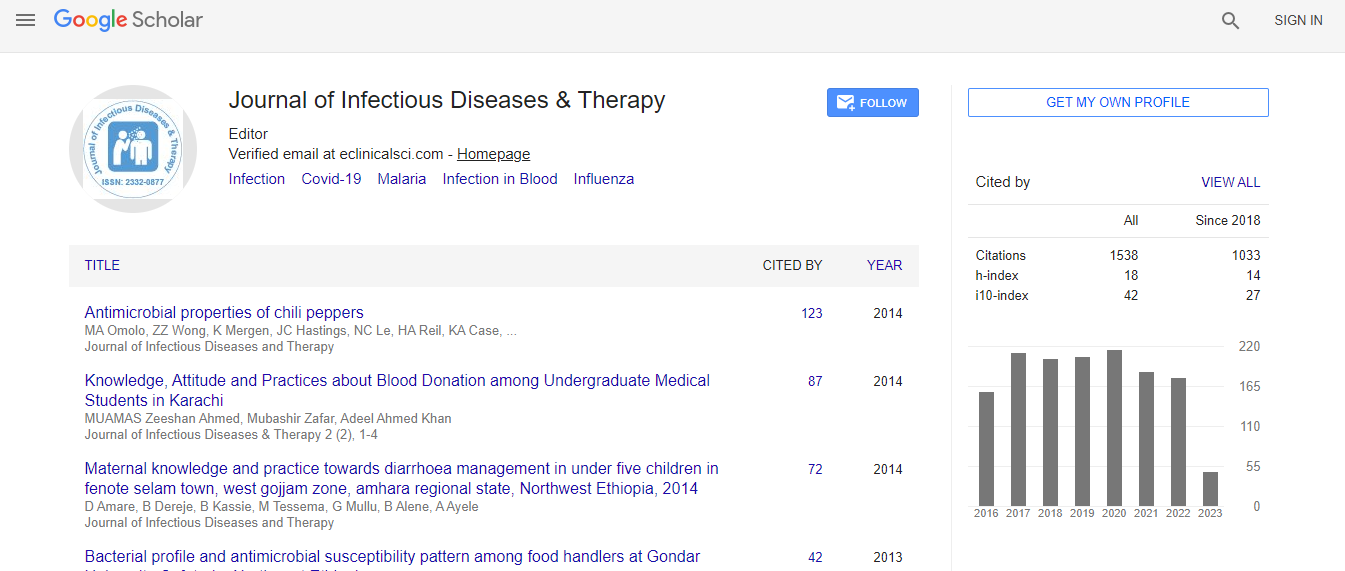
Citations : 1529
Indexed In
- Index Copernicus
- Google Scholar
- 天美传媒 J Gate
- RefSeek
- Hamdard University
- EBSCO A-Z
- OCLC- WorldCat
- Publons
- Euro Pub
- ICMJE
Useful Links
Recommended Journals
Related Subjects
Share This Page
Surveillance systems for nosocomial infections: Principles and challenges
3rd Euro-Global Conference on Infectious Diseases
Manoochehr Karami
Hamadan University of Medical Sciences, Iran
Posters & Accepted Abstracts: J Infect Dis Ther
DOI:
Abstract
Nosocomial Infections (NIs) are considered to be serious public health problems around the world. The NI-related burden is unknown because of lack of access to reliable data, lack of surveillance systems and the complexity of corresponding NI outcomes. Health care systems use different approaches for monitoring NIs. Generally, surveillance methods are categorized under the umbrellas of active, passive and sentinel surveillance methods. At present, hospitals implement passive surveillance approaches because of feasibility and low cost. However, the quality of this methodology is in question; under reporting and lack of timeliness are the main challenges. In contrast to the passive approach of NI surveillance systems, active ones do not face the challenge of realtime detection of hospital-acquired infection and provide high quality data on the trends and burdens of NIs. This approach needs extensive resources. Lessons learnt from the implementation of passive approaches to NI surveillance, especially in low and middle income countries, have revealed the necessity of implementation of integrated sentinel surveillance methods using active approaches at selected hospitals/health care facilities. Selecting representative hospitals can contribute to an appropriate understanding of NIrelated burden.Biography
Email: man.karami@yahoo.com
